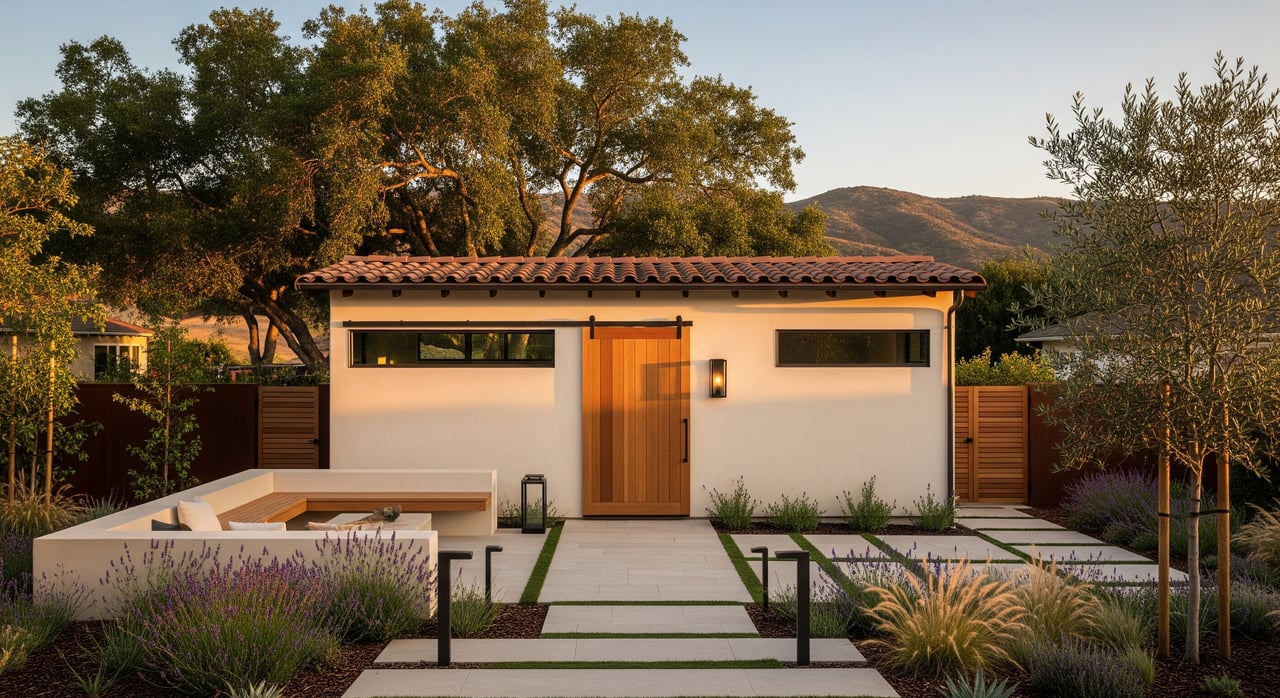
Thinking about adding an accessory dwelling unit to your Poway property but not sure where to start? You are not alone. ADUs and JADUs are powerful tools for multigenerational living and long-term value, yet the rules can feel complex. In this guide, you will get a plain-English overview of how California law applies in Poway, what to confirm locally before you design, how permitting works, typical costs and timelines, and a simple ROI example to help you plan. Let’s dive in.
What California law means in Poway
California has strong ADU laws that shape what cities can and cannot require. The big picture is simple: ADUs must be allowed in single-family and multifamily zones, and most applications must be reviewed using a ministerial approval process. That means no discretionary hearing in most cases, which helps speed up timelines if your plans meet objective standards.
State rules also define junior ADUs. A JADU is capped at 500 square feet and must be created within an existing single-family home. State law further limits how cities handle parking, owner-occupancy, and separate utility meters in many scenarios.
Poway must align with these statewide principles, but the City can adopt objective local standards for things like setbacks, height, design, and lot coverage. Your best move is to confirm Poway’s current Municipal Code and any ADU handouts before you finalize plans.
Poway ADU rules to confirm
Before you sketch layouts or hire a designer, confirm these Poway-specific items. Local standards can change, and details matter for design, cost, and permitting.
Allowed ADU types and counts
- Check if Poway allows detached ADUs, attached ADUs, garage conversions, and JADUs in your zone.
- Many cities allow one ADU plus one JADU on a single-family lot. Confirm Poway’s current rule on unit counts.
Size limits
- JADU: statewide maximum is 500 square feet within the existing single-family home.
- Confirm Poway’s maximum size for attached and detached ADUs, and whether size depends on absolute square footage, a percentage of the main home, or lot size tiers.
- Ask if multifamily properties have different limits.
Setbacks and height
- State law limits large setbacks that would block ADUs, and many jurisdictions use about 4 feet for side and rear setbacks on detached ADUs. Confirm the exact Poway setbacks.
- Ask about allowed height and whether second-story ADUs are permitted.
- Confirm building separation from the primary home if applicable.
Lot coverage and FAR
- Verify whether ADU square footage counts toward lot coverage, floor area ratio, and open-space requirements in Poway.
- Some cities exempt ADUs from certain development standards to encourage production. Confirm Poway’s approach.
Parking and exemptions
- Many cities require one on-site space per ADU unless an exemption applies. Common exemptions include proximity to public transit, converting an existing garage, or creating an ADU within existing space.
- Confirm Poway’s parking requirement, exemptions, whether tandem parking is allowed, and where a required space can be located.
Utilities and meters
- Ask Poway whether a separate water or electric meter is required for your ADU. State rules limit certain meter requirements for ADUs.
- Confirm any water and sewer connection fees, capacity assessments, or septic requirements if your property is not connected to sewer.
Fire and life safety
- Verify Poway or local fire authority requirements for sprinklers, defensible space, and access width. State law may limit additional sprinklers unless the main dwelling already requires them, but confirm locally.
Design standards and overlays
- Check for objective design requirements such as exterior materials, roof pitch, or architectural compatibility.
- Ask if any overlay zones, scenic areas, or historic areas trigger additional standards or reviews.
Fees and impact charges
- Confirm plan check, building permit, school, and utility fees for ADUs in Poway. State law reduces some impact fees for smaller ADUs, but you should verify the current fee schedule.
Short-term rentals and landlord rules
- If you plan to rent the ADU short-term, confirm whether Poway permits short-term rentals and what licenses or taxes apply.
- Review how statewide tenant protections may apply to ADU rentals based on tenancy length and property type.
Permitting steps and timeline in Poway
You can streamline your project by following a simple sequence and arriving prepared.
Pre-application check-in
- Start with an initial discussion with Poway Planning. Confirm zoning, setbacks, height, utilities, and submittal items for your address.
- Share a basic site diagram and photos so staff can flag any obvious issues early.
Site analysis and design
- Create a measured site plan showing property lines, existing structures, and proposed ADU location.
- Prepare floor plans and elevations. For new detached units, you may need structural and engineering plans.
- Plan for parking and utility routing. Note potential tree impacts or grading.
Application submittal (ministerial)
- Submit the application form with site plan, floor plans, elevations, and any structural calculations.
- Provide proof of water and sewer availability or septic documentation if applicable.
- Pay plan check fees and any required deposits.
Plan review and building permits
- Your plans will go through building plan check. This can include structural, electrical, mechanical, plumbing, and fire review.
- State law requires a timely ministerial decision, but exact timing should be confirmed with Poway.
Inspections and final occupancy
- Typical inspection stages include foundation, framing, rough and final for mechanical, electrical, and plumbing.
- After final inspection approval, you receive a certificate of occupancy or final sign-off.
Typical timeline ranges
- Design and permitting can take several weeks to a few months depending on application quality and City workload.
- Construction ranges widely. Garage conversions often run about 3 to 6 months. Detached new construction often runs about 6 to 12 months or more depending on scope, contractor availability, and site conditions.
Costs and what drives them
ADU budgets vary by design and site conditions. These are common drivers that move the numbers up or down.
- Type of ADU: conversions generally cost less than ground-up detached units.
- Size and finishes: higher-end finishes and full kitchen and bath drive cost per square foot.
- Site work: grading, drainage, retaining walls, and long utility runs can add meaningful cost.
- Access and code compliance: hillside access, tree removal, and fire code items can impact schedule and price.
- Utility connections: water or sewer upgrades, new meters, or septic improvements can be major cost items.
Illustrative construction ranges used by many owners and contractors:
- Conversions often start in the mid five figures to low six figures depending on scope and condition.
- New detached ADUs frequently range from about $200 to $500 per square foot or more based on finishes and complexity.
- Soft costs like design, engineering, and permits can add about 10 to 25 percent on top of hard construction costs.
Use these as starting points only. Get quotes from local contractors once you settle on a preliminary plan.
Estimating rent and ROI
If you plan to rent your ADU, estimate income using local comparables and a simple underwriting process.
- Research comparable ADU or small home rentals in Poway and nearby areas. Note square footage, pricing, what utilities are included, and lease terms.
- Decide whether your strategy is long-term rental or short-term rental. Short-term can command higher nightly rates, but it depends on local rules and higher operating effort.
- Build a quick pro forma. Start with monthly rent times 12 months to get gross annual income, then subtract realistic allowances for vacancy, management, maintenance, utilities you cover, insurance, and reserves.
Illustrative example:
- A 600 square foot ADU renting for $2,000 per month yields $24,000 in gross annual rent.
- After a 30 percent total allowance for vacancy and operating costs, the net operating income is about $16,800.
- If construction cost was $150,000, the simple NOI-to-cost ratio is about 11.2 percent. Your actual results will vary based on Poway rents, fees, and project scope.
How ADUs can affect value at resale
ADUs typically increase flexibility for multigenerational living, guest space, or rental income, which many buyers value. Appraisers may consider the income an ADU can produce and comparable sales with similar features. Proper permitting and documentation can support valuation and buyer confidence.
Your design choices matter too. Privacy between the main home and ADU, convenient access, and thoughtful parking are common buyer priorities. Always confirm that your design complies with Poway’s codes and any HOA rules that apply to your property.
Your pre-application checklist
Bring these items to your first conversation with Poway Planning to save time and reduce revisions:
- Property address and assessor parcel number.
- Lot survey or a highly accurate site plan with property lines and structures.
- Existing floor plan and the main home’s square footage, including any garage.
- A sketch of the proposed ADU footprint and basic plumbing and electrical concepts.
- Site photos, including the proposed ADU location and access path.
- Contact details for your designer and structural engineer if you have them.
- Septic records if applicable, or a sewer availability letter.
Next steps
Your best path is to confirm Poway’s current ADU standards, then align your design and budget before you file. If you want help thinking through value, rent potential, and exit strategy, our team brings both homeowner guidance and investor-level analysis across San Diego County. When you are ready to explore your options in Poway, schedule a conversation with Christopher Burgos to map out your plan.
FAQs
Can I build a Poway JADU from an existing bedroom?
- A JADU must be within the existing single-family home and is capped at 500 square feet under state law, so confirm Poway’s design and occupancy rules before you plan.
Do Poway ADUs need on-site parking?
- Many state exemptions limit parking in certain cases like transit proximity or converting an existing garage, but you should confirm Poway’s exact parking rules and exemptions for your address.
Are separate utility meters required for a Poway ADU?
- State law restricts requiring separate water meters in some situations, so confirm Poway’s policies and any water or sewer connection fees or capacity assessments.
How long does Poway ADU permitting take?
- ADU applications are processed ministerially under state law, but timing varies by workload, so plan for several weeks to a few months for design and permitting and confirm local review timelines.
Can I short-term rent my Poway ADU?
- Short-term rental rules vary by city and change over time, so confirm whether Poway permits ADU short-term rentals and what licenses or taxes may apply.
Will my Poway ADU require fire sprinklers?
- Local fire authorities may have specific standards, and state law may limit new sprinklers unless the main home requires them, so verify requirements for your site.
How many ADUs can I build on a Poway single-family lot?
- Many cities allow one ADU plus one JADU on single-family lots, but you should confirm Poway’s current unit counts and any zone limits before you design.