Are Oceanside duplexes and small multi-units still worth a serious look in today’s market? For many investors, the answer is yes, but only if you underwrite carefully, verify the property’s legal status, and stay disciplined about rents, taxes, and renovation plans. If you are thinking about buying a duplex, triplex, or fourplex in Oceanside, this guide will help you focus on the numbers and local rules that matter most. Let’s dive in.
Why Oceanside Draws Multi-Unit Investors
Oceanside offers a mix that gets investors’ attention: a coastal location, diverse housing stock, and several submarkets with very different price points. The city covers about 42 square miles in North San Diego County, so a small multi-unit deal near the coast can look very different from one farther inland.
Recent market data shows why investors need a balanced view. Zillow reported an average Oceanside home value of $877,452, a median sale price of $825,667, median days to pending of 16, and average rent of $2,930 in April and May 2026. That tells you demand is active, but it also means your margin for error can shrink quickly if you overpay or assume aggressive rent growth.
Oceanside Returns Vary by ZIP Code
One of the biggest mistakes investors make is treating Oceanside like one uniform market. In reality, value, rent support, and rough yield can vary meaningfully by ZIP code, which changes how a duplex or fourplex pencils out.
Using Zillow’s current ZIP code figures, average home values and rents are about $1,134,351 and $2,972 in 92054, $875,349 and $2,869 in 92056, $817,705 and $3,083 in 92057, and $783,430 and $2,836 in 92058. Based on those same figures, rough gross yield is about 3.1% in 92054, 3.9% in 92056, 4.5% in 92057, 4.3% in 92058, and around 4.0% citywide before taxes, insurance, vacancy, and repairs.
That spread matters. A higher-priced coastal asset may offer a different risk and return profile than a more affordable inland property, even if both are labeled as duplex opportunities. In Oceanside, your purchase basis often matters more than assuming near-term appreciation will save the deal.
What Makes a Good Oceanside Deal
A strong small multi-unit investment in Oceanside usually has four traits. First, the zoning and legal use are clear. Second, the post-closing carrying costs are realistic. Third, the rents are supported by nearby unit-specific comps. Fourth, any upside comes from permitted improvements, not guesswork.
That sounds simple, but it is where many deals break down. A property may look like a duplex, or a seller may market it as a four-unit opportunity, yet the true investment story depends on what the city allows and what the property actually is on paper.
Verify Zoning Before You Underwrite
For Oceanside investors, zoning due diligence is not optional. The City of Oceanside’s Land Use and Zoning Map Viewer is a helpful starting point for parcel-level research, but the city says it is for reference only and that the applicable zoning standards control.
That means you should confirm more than the building’s appearance. You want to verify the parcel’s zoning, any legal nonconforming status, and whether coastal-zone constraints affect what you can do with the property.
Which Zones Fit Small Multi-Units
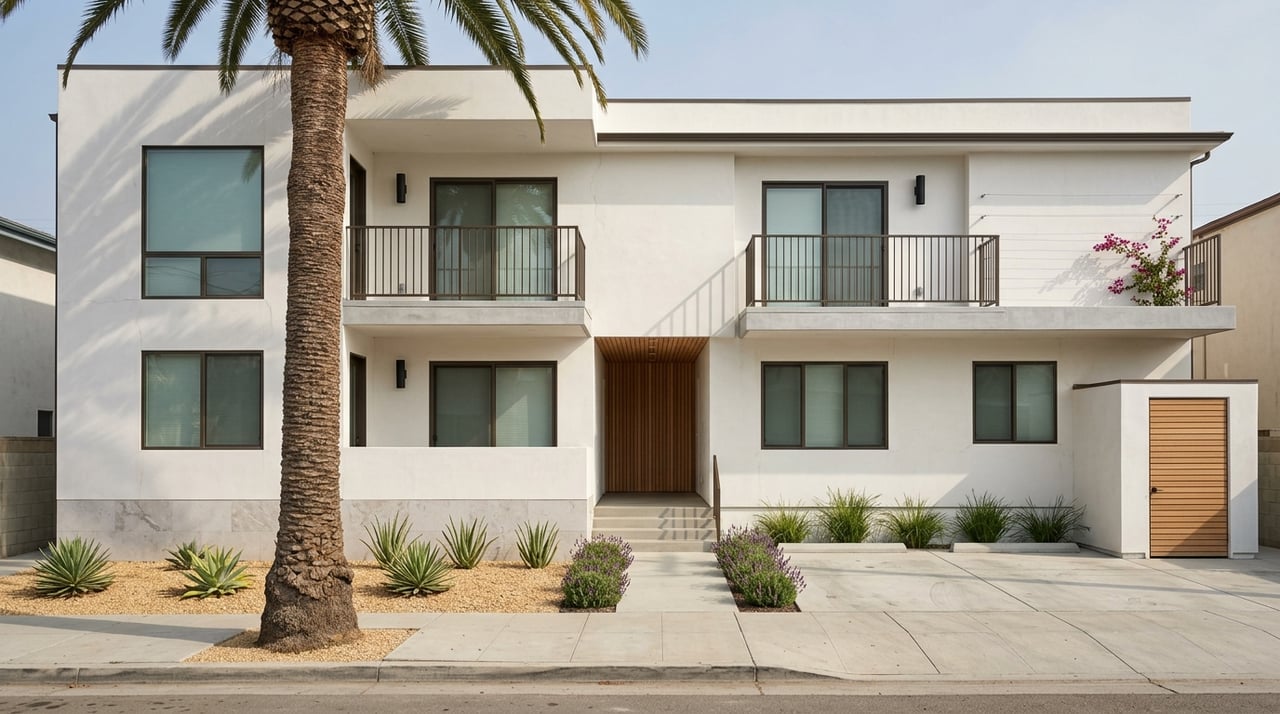
Oceanside’s code defines multifamily residential as two or more dwelling units on a site. It also defines common small multi-unit forms such as two-unit attached, multi-plex, and multiple-unit structures.
In the RS single-family district, existing duplexes, triplexes, and fourplexes may remain, but new residential construction must be single-family dwellings or approved accessory structures. By contrast, RM-A, RM-B, and RM-C are intended to support duplexes, townhouses, multi-dwelling structures, and cluster housing. Higher-density districts such as RH, RH-U, and RT support apartments and related forms.
Physical Form vs Legal Status
This is a key point for Oceanside buyers. A building that looks like a duplex is not automatically a legally conforming duplex for underwriting purposes.
Before you assume unit count, future expansion, or resale positioning, you need to separate physical layout from legal status. That step can protect you from buying based on income assumptions that do not hold up during escrow, appraisal, or future permitting.
Use Rent Ranges, Not One Number
Rents in Oceanside can support a deal, but only when you underwrite with realistic local comps. The most recent Apartments.com guide reports average apartment rents of $1,901 for studios, $2,265 for one-bedroom units, $2,713 for two-bedroom units, and $4,056 for three-bedroom units.
At the same time, Zillow’s citywide and ZIP code rent figures differ because they track different property baskets. That is why smart investors treat rent data as a range-setting tool, not a single exact answer.
How to Underwrite Rents More Carefully
When you analyze a duplex or small multi-unit property in Oceanside, focus on comps that match the asset as closely as possible:
- Unit count
- Bedroom and bathroom mix
- Renovation level
- Parking setup
- Neighborhood or ZIP code
- Whether the building feels more coastal, suburban, or value-oriented
That approach helps you avoid overstating income. It also gives you a better way to stress-test the deal if lease-up takes longer than expected or if a unit needs more work before it can reach target rent.
Watch Taxes and Local Assessments
Many investors spend too much time on headline rent and not enough time on operating expenses. In Oceanside, one of the biggest underwriting mistakes is assuming the seller’s current tax bill will match your future ownership costs.
California property tax is generally 1% plus voter-approved debt or bond charges, and county assessors reassess property at change of ownership or new construction. If you buy at today’s market value, your post-closing property tax burden may be meaningfully higher than what the seller has been paying.
Oceanside also has 11 active landscape maintenance assessment districts, and annual assessments vary by neighborhood and benefit level. That means two similar-looking properties can carry different costs depending on where they sit.
Know the Rent Rule Risk
If you are buying an older duplex, triplex, or fourplex, California rent rules need to be part of your underwriting. The California Department of Justice states that the Tenant Protection Act caps annual rent increases for most covered housing at 5% plus CPI, with a maximum of 10%.
For San Diego County, the current cap for increases taking effect between August 1, 2025 and July 31, 2026 is 8.8%. The law generally applies to rental housing more than 15 years old and requires just cause for evictions after a tenant has lived in the unit for at least one year.
Some exemptions do exist, including certain owner-occupied two-unit properties and some single-family homes and condos when statutory notice and ownership conditions are met. Still, for many Oceanside small multi-unit investors, rent cap exposure should be treated as a core part of the business plan, not a footnote.
Value-Add Often Comes From Permitted Unit Growth
In Oceanside, the best value-add plan is not always cosmetic. Fresh finishes can help, but some of the strongest upside may come from legal, city-permitted unit additions when the parcel and property type support them.
The city is clear that owners should check with Planning before pursuing additional units, garage conversions, or building enlargements. Permits are required for remodeling work that involves electrical, plumbing, or gas systems, so a realistic plan must account for both timing and compliance.
Why ADUs Matter for Small Multi-Units
Oceanside’s ADU rules make this especially relevant for investors. Under city rules, a detached ADU may be up to 1,200 square feet, and an attached ADU can be up to 50% of the primary dwelling.
For existing multifamily buildings, the city says owners may add at least one ADU or up to 25% of the existing units in non-livable space. The city also notes that conversion ADUs can be less expensive than new detached construction, most city-controlled impact fees are waived except school fees, and ADU permit review is completed in 60 days.
ADUs and JADUs must be rented for more than 30 days rather than used as short-term rentals. For a duplex or fourplex investor, that framework can create a practical path to added income if the site and zoning align.
Financing Takes More Cash Than Many Buyers Expect
If you are moving from single-family investing into two- to four-unit property ownership, financing may feel familiar at first, but there are important differences. Fannie Mae allows rental income when it is likely to continue, and the subject property can be a two- to four-unit principal residence occupied by the borrower or a one- to four-unit investment property.
For two- to four-unit properties, lenders use the Small Residential Income Property Appraisal Report. Fannie Mae’s reserve guidance also indicates that six months of reserves are typically required for a two- to four-unit principal residence transaction and for an investment property transaction.
In practical terms, that means you should prepare for more than a down payment and closing costs. If the deal only works on paper because you are stretching your liquidity, it may not be the right Oceanside acquisition.
A Smarter Oceanside Investment Approach
The best Oceanside duplex and small multi-unit buyers stay disciplined. They compare submarkets carefully, verify legal use early, build rent assumptions from local comps, and account for taxes, assessments, and rent-rule exposure before they commit.
They also look for value-add paths that can be executed through clear, city-permitted improvements rather than uncertain entitlement bets. In a market like Oceanside, that kind of discipline can make the difference between a property that merely looks promising and one that performs.
If you want help evaluating Oceanside duplexes or small multi-unit opportunities, Christopher Burgos can help you source, analyze, and negotiate with an investor-minded strategy backed by local San Diego market knowledge.
FAQs
What should you check before buying a duplex in Oceanside?
- You should verify zoning, legal unit status, rent comps, post-closing property taxes, local assessments, and any planned renovation or ADU feasibility before underwriting the deal.
What are average rents for small multi-unit investing in Oceanside?
- Recent Oceanside apartment averages are about $1,901 for studios, $2,265 for one-bedroom units, $2,713 for two-bedroom units, and $4,056 for three-bedroom units, but you should underwrite from nearby unit-specific comps rather than one broad city average.
Which Oceanside ZIP codes may offer different yield profiles?
- Based on current Zillow figures, rough gross yield appears lower in 92054 and higher in 92057 and 92058, with 92056 falling in between, but actual performance depends on property condition, legal use, and your purchase basis.
Can you add an ADU to an Oceanside multi-unit property?
- In some cases, yes. The City of Oceanside says existing multifamily buildings may add at least one ADU or up to 25% of existing units in non-livable space, subject to city rules and property-specific review.
Do Oceanside small multi-units face California rent cap rules?
- Many older rental properties do. The Tenant Protection Act generally applies to rental housing more than 15 years old, caps many annual increases, and includes just-cause rules, though some exemptions may apply depending on the property and ownership structure.
How much cash reserve do you need for a two- to four-unit purchase?
- Fannie Mae guidance indicates that six months of reserves are typically required for two- to four-unit principal residence transactions and investment property transactions, so you should plan for a meaningful cash cushion beyond closing costs.